
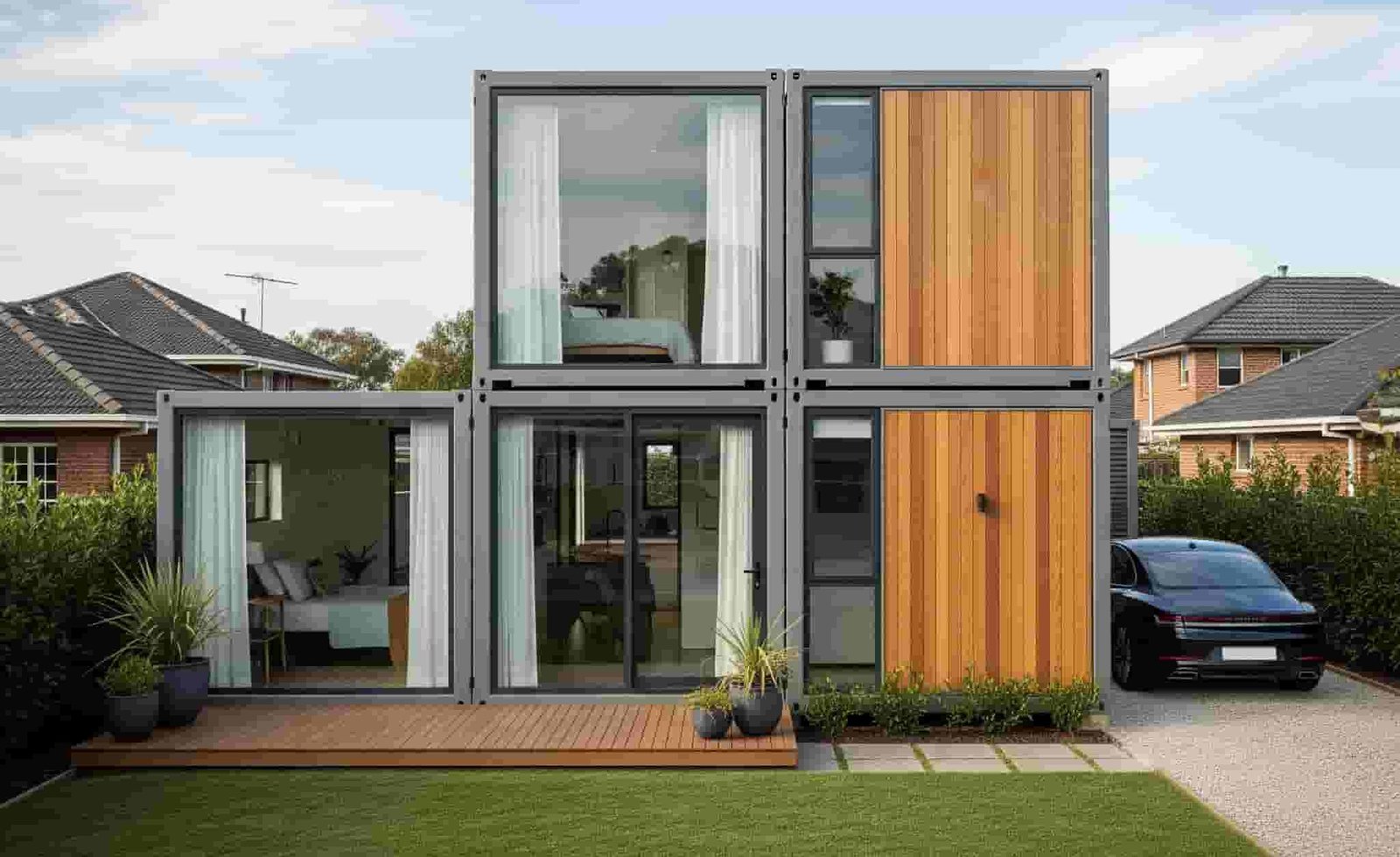
2025 New York Container Home Zoning Laws: The Ultimate Legal Guide
Navigate New York’s Uniform Code, local zoning ordinances, and PE requirements with confidence—your comprehensive guide to building code-compliant container homes in New York State
Building Code-Compliant Container Homes in New York
Building a code-compliant container home in New York is achievable when plans meet the Uniform Code, local zoning requirements, and professional engineering standards, with complete and coordinated submittals. This comprehensive guide explains New York Container Home Zoning Laws, permit processes, PE requirements, differences between NYC and upstate jurisdictions, costs, timelines, and provides a step-by-step path to help support successful approvals.
This guide is designed to help you understand the regulatory landscape and make informed decisions about your container home project in New York. We’re here to support your journey with helpful information and professional documentation.
🗽 Are Container Homes Legal in New York?
Yes! Container homes are permissible in New York when projects comply with the Uniform Fire Prevention and Building Code, local zoning ordinances, and site regulations, with approvals issued by the authority having jurisdiction. The core principle is performance-based compliance: structural integrity, egress, fire safety, energy efficiency, and sanitation must be demonstrated in sealed plans prepared by licensed professionals.
The Foundation of New York Container Home Approval
New York Container Home Zoning Laws operate on a foundation of code compliance and professional certification. Unlike some states where prescriptive pathways exist, New York emphasizes engineered solutions with professional oversight. This approach, while thorough, helps ensure structural safety and long-term habitability.
Key Legal Requirements
- Uniform Code Compliance: All structures must meet New York’s Uniform Fire Prevention and Building Code, which incorporates ICC frameworks with state-specific amendments
- Professional Engineering: Licensed Professional Engineer (PE) seals are typically required for structural modifications, foundation design, and overall structural systems
- Local Zoning Approval: Each municipality enforces specific zoning ordinances governing use, setbacks, height, lot coverage, and appearance standards
- Complete Submittals: Permit applications must include coordinated architectural, structural, MEP, site, and energy documentation
💡 Professional Recommendation
We recommend engaging professionals familiar with both container construction and New York regulations early in your planning process. This investment in expertise can help identify potential issues before they become costly problems and supports smoother permit approval. Our plans are designed to work efficiently with PE review for New York projects.
📋 Understanding Code & Zoning Basics
New York Container Home Zoning Laws operate at two complementary layers: statewide building codes (the Uniform Code) and local zoning ordinances that govern land use, density, and placement. Understanding both layers is essential for successful project planning.
The Uniform Code (Statewide Building Standards)
New York’s Uniform Fire Prevention and Building Code establishes minimum construction standards throughout the state. Most jurisdictions align with International Code Council (ICC) frameworks including IRC 2021 and IBC 2021, with New York-specific amendments addressing regional concerns like snow loads, seismic considerations, and energy performance.
Key Uniform Code Areas for Container Homes
- Structural: Load-bearing capacity, connection design, foundation adequacy, lateral force resistance
- Fire Safety: Egress requirements, smoke/CO alarm placement, fire separation, ratings for assemblies
- Energy: Envelope insulation values, fenestration performance, HVAC efficiency, air sealing targets
- Mechanical: Ventilation rates, combustion air provisions, duct sizing and sealing
- Electrical: Service sizing, circuit protection, grounding, special location requirements
- Plumbing: Fixture requirements, drainage, venting, water supply sizing, backflow prevention
Local Zoning Ordinances (Municipal Land Use Regulations)
While the Uniform Code addresses how structures are built, local zoning ordinances determine where they can be built and what forms they may take. Each municipality in New York has unique zoning requirements that can significantly impact container home feasibility.
Common Zoning Considerations
- Use Districts: Residential classifications (R1, R2, R3, etc.) define permitted uses and density
- Dimensional Requirements: Setbacks from property lines, height limits, lot coverage maximums
- Minimum Dwelling Size: Some jurisdictions specify minimum square footage for primary residences
- Architectural Standards: Design guidelines addressing materials, roof forms, and neighborhood compatibility
- Accessory Structures: Rules for ADUs, workshops, and secondary buildings on properties
- Parking & Access: Off-street parking requirements and driveway/access standards
🏘️ Where Container Homes Fit Best in New York
Container home success often depends on selecting appropriate zoning districts and understanding how local regulations support different project types. While requirements vary by municipality, certain zoning classifications tend to be more accommodating for container construction.
Favorable Zoning Classifications
R1 Single-Family Residential
Best For: Primary residences with permanent foundations
Advantages: Typically the most straightforward path for permitted container homes as primary dwellings. Clear use classification and established review processes.
Considerations: May have minimum square footage requirements, architectural review, and specific setback/coverage limits
R2 Two-Family & ADU Districts
Best For: Duplex layouts, accessory dwelling units, rental income properties
Advantages: Supports multi-container strategies including main house plus guest unit configurations. Can accommodate creative layouts.
Considerations: ADU regulations vary widely; some municipalities have size limits, parking requirements, or owner-occupancy provisions
Rural Residential Districts
Best For: Larger properties, agricultural settings, off-grid capable designs
Advantages: Often features larger lots and fewer aesthetic restrictions. May allow agricultural/commercial uses. Supportive of multi-container configurations and outbuildings.
Considerations: Well/septic requirements, road access standards, potential agricultural assessment implications
Site Selection Considerations for New York Container Homes
- Utility Access: Municipal water/sewer versus well/septic—connection fees and feasibility vary significantly
- Topography: Steep slopes may require extensive foundation work but can create opportunities for walk-out basement designs
- Soil Conditions: Bearing capacity affects foundation costs; ledge/rock may increase excavation expenses
- Access: Year-round road access for construction equipment and container delivery (minimum 14′ wide clearance typically needed)
- Neighborhood Context: Existing development patterns influence architectural review and design flexibility
📝 Complete Permit Requirements for New York Container Homes
Every permanent residence in New York requires building permits with complete submittals demonstrating compliance with New York Container Home Zoning Laws. Understanding what documentation is needed helps avoid delays and revision cycles.
Essential Permit Documentation Checklist
Architectural Plans
- Floor plans with dimensions, room labels, and door/window schedules
- Building elevations showing all four sides with materials noted
- Wall sections detailing assemblies from foundation to roof
- Construction details for critical connections and assemblies
- ADA/visitability compliance where applicable
- Finish schedules and material specifications
Structural Engineering (PE-Sealed)
- Container modification analysis for all openings and cuts
- Reinforcement details for headers, frames, and structural connections
- Foundation design with soil bearing verification
- Lateral force resistance calculations (wind and seismic)
- Uplift and overturning analysis with anchor design
- Gravity load paths and structural calculations
Site/Civil Plans
- Boundary survey showing property lines and easements
- Site plan with building footprint, setback dimensions, and existing features
- Grading and drainage plan showing positive drainage away from structure
- Driveway/curb cut details and access routes
- Erosion and sediment control measures
- Utility connection locations (water, sewer, electric, gas)
MEP Systems (Mechanical, Electrical, Plumbing)
- Electrical: Service entrance, panel schedules, circuit layouts, lighting plans, grounding
- Plumbing: Fixture locations, supply/drainage routing, vent diagrams, water heater sizing
- Mechanical: HVAC equipment sizing, ductwork layout, combustion air provisions, ventilation
Energy Compliance Documentation
- Envelope assembly details with R-values for all components
- Window and door schedules with U-factors and SHGC values
- Air sealing strategy and blower door targets where required
- HVAC equipment efficiency ratings
- Energy code compliance documentation (REScheck or equivalent)
Fire and Life Safety
- Egress window/door locations and dimensions
- Smoke and CO alarm locations per code requirements
- Fire separation distances and fire-rated assemblies where required
- Handrail and guard details for stairs and elevated surfaces
✓ Submittal Best Practices
Complete, well-organized submittals with clear labeling and code compliance narratives can help accelerate review processes. We design our plans with New York’s documentation requirements in mind, providing comprehensive packages that work efficiently with PE review and building department processes.
👷 Professional Seals & Typical Engineering Scope
New York typically requires licensed Professional Engineer (PE) involvement for container home projects. Understanding typical engineering scope and costs helps with realistic project budgeting.
Professional Engineering Services & Typical Costs
| Engineering Service | Typical Scope | Cost Range | Timeline |
|---|---|---|---|
| Structural Analysis | Container modifications, reinforcement design, load calculations, connection details | $2,500 – $5,000 | 2-4 weeks |
| Foundation Design | Site-specific foundation engineering, soil analysis review, frost depth compliance | $1,500 – $3,000 | 1-2 weeks |
| Modifications Review | Analysis of door/window openings, structural cut reviews, reinforcement specifications | $800 – $1,500 | ~1 week |
| Full Project PE Oversight | Complete structural engineering, plan coordination, construction phase services | $5,000 – $10,000 | 4-8 weeks |
Note: Costs vary based on project complexity, location, and engineer experience. These are approximate 2025 ranges for typical single or multi-container residential projects.
Why Professional Engineering Matters
- Code Compliance: PEs ensure designs meet New York’s Uniform Code and local amendments
- Liability Protection: Professional seals provide legal protection and demonstrate due diligence
- Permit Approval: Most jurisdictions require PE stamps for approval of container structures
- Structural Safety: Engineered solutions help ensure long-term structural integrity and occupant safety
- Insurance: Many insurers require professionally engineered structures for coverage
🏙️ NYC vs Upstate: Key Differences in Permitting
New York Container Home Zoning Laws are implemented quite differently between New York City and upstate jurisdictions. Understanding these variations helps set appropriate expectations for timelines, costs, and process complexity.
🏙️ New York City (5 Boroughs)
Process Characteristics
- Pre-Application Meetings: Often recommended or required for complex projects
- Design Professional of Record: Licensed architect or engineer must serve as registered design professional
- Plan Examination: Rigorous review process with multiple disciplines
- Special Inspections: Third-party inspection requirements for structural elements
- Coordination Requirements: High level of inter-disciplinary coordination expected
Typical Timeline & Costs
- Review Time: 4-12 weeks (or longer for complex projects)
- Permit Fees: $3,000-$8,000+ depending on scope and borough
- Professional Fees: Higher due to coordination requirements
- Special Inspections: $2,000-$5,000 additional
Advantages
- Comprehensive review reduces construction-phase issues
- Well-defined processes and extensive precedent
- Professional support infrastructure available
🌲 Upstate New York
Process Characteristics
- Streamlined Reviews: Often shorter review cycles with practical approach
- Local Accessibility: Building officials often more accessible for consultation
- Flexible Approaches: Greater openness to innovative designs in many jurisdictions
- Rural Advantages: Larger lots support multi-container layouts and flexibility
- Variance Options: Local boards may be receptive to reasonable variance requests
Typical Timeline & Costs
- Review Time: 2-6 weeks for complete submittals
- Permit Fees: $1,000-$3,000 typical range
- Professional Fees: Often lower due to less coordination complexity
- Inspection Requirements: Standard field inspections
Advantages
- Lower overall costs for permitting and professional services
- Faster timelines for well-prepared submittals
- Design flexibility in rural/suburban settings
- Potential for pre-application guidance and feedback
💡 Choosing Your Location Strategically
If you have flexibility in site selection, consider how different jurisdictions might impact your project timeline and budget. Upstate locations often offer advantages for container homes, particularly multi-container designs, with lower costs and potentially faster approvals. However, excellent projects can be permitted throughout New York with proper planning and professional support.
🔧 Design & Engineering for Compliance
Successful container home projects in New York address specific technical challenges inherent to steel container construction while meeting all applicable code requirements. Understanding these design considerations supports better planning and helps avoid common pitfalls.
Critical Design Areas for New York Container Homes
Structural Considerations
- Opening Reinforcement: All door and window cutouts require engineered reinforcement with PE-sealed details
- Frame Design: Structural framing must address loads from roof, snow (significant in New York), and occupancy
- Diaphragm Action: Floor and roof diaphragms should be designed to resist lateral forces
- Foundation Connections: Containers must be properly anchored to engineered foundations for uplift and lateral resistance
- Multi-Container Connections: When joining multiple units, connection design is critical for structural integrity
- Snow Load Provisions: New York snow loads vary by region and require specific design considerations
Thermal Envelope & Energy Performance
- Continuous Insulation: Steel’s high thermal conductivity requires continuous insulation strategies to manage thermal bridging
- Exterior Insulation: Exterior mineral wool or rigid foam systems can help address thermal bridging comprehensively
- Spray Foam Options: Closed-cell spray foam provides high R-value and air sealing in limited wall thickness
- Energy Code Compliance: Must meet New York’s energy code requirements (typically based on IECC with amendments)
- Climate Zone Considerations: Most of New York is Climate Zones 5 or 6, requiring R-20+5ci or higher wall assemblies
Moisture Management
- Vapor Control: Steel containers are impermeable; smart vapor control strategies help manage interior moisture
- Rainscreen Systems: Ventilated rainscreen assemblies behind exterior cladding help manage moisture
- Condensation Prevention: Keeping steel surfaces above dew point temperature through proper insulation placement
- Ventilation: Mechanical ventilation helps control interior humidity levels year-round
Fire Safety & Egress
- Egress Requirements: Every bedroom requires egress window or door meeting dimensional requirements
- Fire Ratings: Party walls and certain assemblies may require specific fire ratings
- Smoke/CO Alarms: Proper placement per code requirements with interconnected units
- Separation Distances: Adequate spacing from property lines and other structures
HVAC Systems
- Right-Sizing: Proper Manual J load calculations accounting for envelope performance
- High-Performance Equipment: Modern, efficient systems appropriate for tight envelope construction
- Distribution: Thoughtful ductwork design accommodating limited space
- Ventilation: Fresh air introduction meeting code requirements (HRV/ERV often beneficial)
📋 The Permit Process Step-by-Step
Understanding the typical permit process timeline helps set realistic expectations and supports effective project planning. While specific procedures vary by jurisdiction, this general framework applies to most New York container home projects.
Phase 1: Pre-Application & Site Analysis (4-6 Weeks)
Key Activities
- Confirm zoning classification, allowable uses, and dimensional requirements
- Research setbacks, height limits, lot coverage maximums, and any design guidelines
- Identify overlays (historic districts, flood zones, wetlands, etc.)
- Obtain boundary and topographic survey from licensed surveyor
- Confirm water/sewer availability or assess well/septic feasibility
- Engage architect and PE familiar with container construction and New York requirements
- Consider pre-application meeting with building department (highly recommended)
Phase 2: Design Development & Engineering (6-10 Weeks)
Key Activities
- Develop coordinated architectural, structural, MEP, site, and energy documentation packages
- Select envelope assemblies that meet energy targets while managing thermal bridging
- Complete structural engineering with PE seals for modifications and foundation
- Conduct internal quality assurance reviews to catch coordination issues
- Prepare special inspections plans if required (NYC and some other jurisdictions)
- Develop construction logistics plans for constrained urban sites if applicable
- Create code compliance narratives explaining how design meets requirements
Phase 3: Permit Submittal & Review (3-10 Weeks)
Key Activities
- Submit complete application with all required documentation (digital submission typical)
- Include organized sheet sets with clear labels, bookmarks for digital files
- Provide code compliance summaries highlighting how requirements are met
- Respond promptly to plan review comments with revision clouds and delta notes
- Provide updated calculations or additional details as requested
- Address any coordination issues identified during review
- Pay permit fees upon approval
- Schedule required inspections and special inspections where applicable
Phase 4: Construction & Inspections (Variable)
Typical Inspection Sequence
- Foundation Inspection: Before concrete pour (footing/rebar verification)
- Rough-In Inspections: Framing, electrical, plumbing, HVAC before concealment
- Insulation Inspection: Before covering with finish materials
- Final Inspection: Completed structure with all systems operational
- Special Inspections: Third-party verification of structural elements where required
✓ Timeline Success Factors
Complete, well-organized submittals with professional documentation can significantly reduce review time. Our permit-ready plans are designed with New York’s requirements in mind, providing the comprehensive documentation that helps support efficient reviews. Working with experienced professionals who understand local procedures also contributes to smoother processes.
💰 Complete Cost Analysis for New York Container Homes
Understanding realistic costs helps with effective project budgeting. New York’s regulatory requirements, climate conditions, and labor markets influence container home costs. These estimates represent typical 2025 ranges for a baseline single 40′ container home (~320 sq ft) in New York.
| Cost Category | Budget Range | Mid-Range | High-End |
|---|---|---|---|
| Container & Delivery | $3,000 – $5,000 | $6,000 – $8,000 | $10,000 – $15,000 |
| Foundation System | $8,000 – $12,000 | $15,000 – $25,000 | $30,000 – $45,000 |
| Structural Modifications | $5,000 – $8,000 | $10,000 – $15,000 | $20,000 – $30,000 |
| Insulation & Air Sealing | $3,000 – $5,000 | $6,000 – $10,000 | $12,000 – $18,000 |
| Interior Build-Out | $15,000 – $25,000 | $35,000 – $60,000 | $75,000 – $125,000 |
| MEP Systems | $10,000 – $16,000 | $20,000 – $31,000 | $39,000 – $63,000 |
| Exterior & Site Work | $12,000 – $23,000 | $28,000 – $50,000 | $60,000 – $100,000 |
| Labor & Construction | $15,000 – $25,000 | $30,000 – $50,000 | $60,000 – $100,000 |
| Professional Fees (PE, Arch) | Included above | Included above | Included above |
| Total Construction Cost | $71,000 – $119,000 | $150,000 – $249,000 | $306,000 – $496,000 |
Additional Cost Considerations
- Permit Fees: $1,000-$3,000 upstate; $3,000-$8,000+ NYC
- Survey & Testing: $1,500-$3,000 for boundary survey and soil testing
- Utility Connections: $3,000-$15,000+ depending on distance and type
- Site Preparation: $5,000-$20,000 for clearing, grading, access improvements
- Contingency: 10-15% recommended for unforeseen conditions
Note: Costs vary significantly based on location (NYC vs upstate), site conditions, accessibility, finish selections, and labor market conditions. These estimates reflect typical 2025 ranges and should be verified with local contractors.
🔍 Common Challenges & Practical Solutions
Understanding common challenges that arise in New York container home projects helps with proactive planning and realistic expectations. Here are frequent issues and approaches that have worked for successful builders.
Challenge 1: Aesthetic Compatibility & Neighborhood Standards
The Challenge
Some municipalities and neighborhoods have concerns about industrial appearance of shipping containers not fitting established architectural character.
Practical Solutions
- Exterior Cladding: Fiber cement siding, wood siding, or metal panels can create traditional appearances
- Pitched Roofs: Gable or hip roofs help containers blend with conventional homes
- Porch Elements: Front porches, covered entries, and traditional detailing add residential character
- Window Proportioning: Well-designed fenestration patterns matching neighborhood scales
- Landscaping: Thoughtful landscaping helps integrate structures into settings
- Examples & Precedent: Sharing successful local examples can help building departments and neighbors
Challenge 2: Minimum Dwelling Size Requirements
The Challenge
Some zoning ordinances specify minimum square footage for primary residences (often 600-1,000 sq ft minimum).
Practical Solutions
- Multi-Container Layouts: L-shaped, T-shaped, or H-shaped configurations combining multiple containers
- Finished Basement: Including basement area in total square footage calculation where permitted
- Variance Applications: Seeking relief from minimums with design rationale and neighbor support
- ADU Classification: Pursuing accessory dwelling permit rather than primary residence where feasible
Challenge 3: Private Restrictions (HOA Covenants)
The Challenge
Homeowners associations or deed restrictions may prohibit “non-traditional” construction or specifically mention shipping containers, regardless of zoning compliance.
Practical Solutions
- Early Research: Review HOA covenants and deed restrictions during due diligence before property purchase
- HOA Engagement: Present professional designs to architectural review committees showing finished appearance
- Covenant Interpretation: Work with real estate attorney to review restrictions and interpret applicability
- Site Selection: Consider properties without HOA restrictions if container design is priority
Challenge 4: Foundation Costs on Difficult Sites
The Challenge
Rocky terrain, poor soils, steep slopes, or deep frost lines can significantly increase foundation costs in New York.
Practical Solutions
- Geotechnical Investigation: Early soil testing helps identify conditions and plan appropriately
- Alternative Foundation Systems: Helical piers, grade beams, or engineered fills may be cost-effective
- Site Selection: Choosing building locations on property with best conditions
- Design Adaptation: Working with site contours rather than extensive excavation and retaining walls
❓ Frequently Asked Questions About New York Container Homes
📚 Essential Resources & Next Steps
Official Resources
- NYC Department of Buildings – City-specific permitting information
- NY State Building Standards – Uniform Code reference materials
Our Services
- Permit-Ready Plans – New York-compliant container home plans
- Expert Consultation – Site-specific guidance and support
- Building Codes Guide – IRC & IBC compliance information
Ready to Start Your New York Container Home Project?
We’re honored to support your container home journey in New York. Our permit-ready plans are designed with New York Container Home Zoning Laws in mind, incorporating professional engineering principles and comprehensive documentation that works efficiently with PE review and building department processes.
Each plan includes complete architectural drawings, structural details, MEP layouts, and construction specifications. While Professional Engineer approval is recommended for all New York projects to help ensure local code compliance, our comprehensive documentation can help support efficient PE review and potentially reduce engineering time.
We also offer plan editing services after purchase at an additional cost if you need modifications to accommodate your specific site conditions, local requirements, or preferences.
Important: Our plans are provided as-is without warranty or guarantee. Professional Engineer review and local building department approval are separate processes, and we cannot guarantee permit approval as requirements vary by jurisdiction. However, we’re confident our plans provide strong foundations for successful New York container home projects, and we’re here to support you with helpful guidance throughout your journey.
Browse Our Permit-Ready Plans →Questions about New York requirements? Contact us – we’re happy to help!



[…] IRC Figure N1101.8 and Table N1101.2 provide county-by-county climate zone designations for the entire United States based on National Weather Service data. Your building department will confirm your zone during the permit application process. For preliminary planning, consult the ENERGY STAR R-Value map which provides a visual reference aligned with 2021 IECC requirements (which IRC references). State-specific guidance is available for California container homes, Texas building requirements, Florida hurricane codes, Colorado climate considerations, and New York zoning laws. […]
[…] Planning your container home interior? This guide answers every question US homeowners ask: How do I design a bedroom in a container? What materials work best? How much will my kitchen cost? Can I fit a real bathroom? This practical, room-by-room guide provides real-world solutions, accurate USA pricing, material recommendations, and design strategies proven in thousands of container homes across America—from Texas to California, Florida to New York. […]