
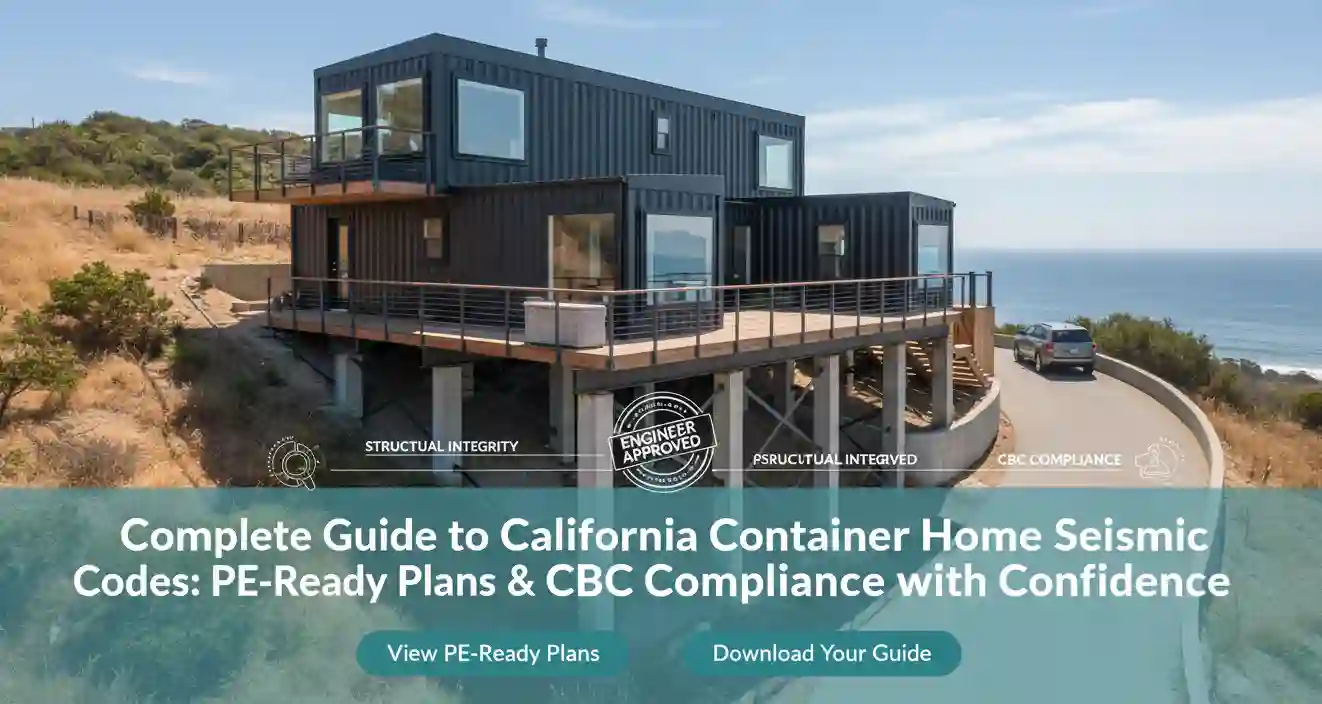
Complete Guide to California Container Home Seismic Codes: PE-Ready Plans & CBC Compliance
Welcome to PermitContainerHomes.com. Building a container home in the Golden State is an incredible opportunity for affordable, sustainable housing, but it requires meticulous planning, especially concerning California Container Home Seismic Codes. This comprehensive guide covers the essentials of California’s strict building requirements, including CBC compliance, seismic design standards, Title 24 energy efficiency, and wildfire protection measures. Our expertly prepared, permit-ready plans are designed to simplify this complex process for you.
Ready to Build with Confidence in California?
Our engineered plans are designed to address the state’s complex codes, specifically the rigorous California Container Home Seismic Codes. Please remember that securing the final seal from a local California-licensed Professional Engineer (PE) is a mandatory step for obtaining your building permit.
Explore Our PE-Ready Plans📖 Comprehensive Table of Contents
🧭 California Code Framework for Container Homes
California Building Code (CBC) for Container Homes
Building California container homes requires strict compliance with the California Building Code (CBC/Title 24). The CBC adopts the International Building Code (IBC) and International Residential Code (IRC) with substantial state amendments that specifically govern seismic design, energy efficiency, and fire safety. Always verify local amendments with your specific building department, as they may impose additional requirements for container home construction.
How California Codes Work for Container Homes
California uses the California Building Code (CBC/Title 24) with state amendments specifically for seismic design, energy efficiency, and wildfire protection. California container homes must meet these strict standards, and local jurisdictions may add additional requirements for container home construction. Compliance requires plans sealed by a California-licensed Professional Engineer (PE).
Title 24 Energy Efficiency Standards
All California container homes must meet California’s strict Title 24 energy efficiency standards. This is a critical design step requiring enhanced insulation, meticulous thermal bridge control (essential for steel containers), high-performance windows, and high-efficiency HVAC systems specific to your climate zone.
Seismic and Wildfire Requirements
California container homes in seismic zones require engineered foundations and connections designed by a California-licensed PE. Container homes located in WUI (Wildland-Urban Interface) zones must adhere to heightened fire safety standards, including the use of fire-resistant materials, maintenance of defensible space, and incorporation of ignition-resistant assemblies. Learn more about California Building Standards Commission requirements.
📋 Essential Requirements for California Container Homes
1) Building Permits and Required Documentation
The permitting process in California is detailed and requires a complete package of professionally sealed documents. Our plans provide the foundation for these critical submissions.
Required Permit Documents (Must be PE/Architect Sealed)
- Architectural plans stamped by a California-licensed architect or engineer
- Structural calculations for seismic design and container modifications
- Foundation design appropriate for soil conditions and seismic zone
- MEP plans with Title 24 energy compliance calculations (CALCERTS)
- Site plan showing setbacks, drainage, and wildfire clearances
- Fire department access and water supply documentation (especially in WUI)
- Environmental review if required by the jurisdiction (CEQA)
2) Professional Design Requirements (PE Seal is Mandatory)
All California container homes require drawings sealed by a California-licensed Professional Engineer or Architect for container structural modifications, complex seismic connections, and engineered foundations. You will need a local PE to review and seal your plans before submission. Visit ICC (International Code Council) for additional code resources.
3) Inspection Schedule
California container homes require numerous inspections due to the state’s stringent safety and energy codes. These include inspections for foundation, framing/structural, seismic connections, MEP rough-in, insulation/energy compliance, fire safety features, and final occupancy approval.
🗺️ Regional Differences for California Container Homes
California’s diverse geography means building codes change dramatically based on your specific location:
Key Regional Focus Areas
- San Andreas Fault Zone: High seismic design requirements for container homes.
- Coastal Areas: Corrosion protection (galvanizing/coatings) and coastal development permits.
- Central Valley: Expansive soils (requiring pier/grade beam) and extreme heat design considerations.
- Sierra Nevada/Mountains: Significant snow loads and strict wildfire WUI requirements.
- Desert Regions: Extreme temperatures, high wind loads, and potential flash flood zones.
⚖️ Critical Compliance Areas
Understanding California Container Home Seismic Codes
To ensure life safety and structural integrity, container homes must comply with the demanding California Container Home Seismic Codes based on site-specific soil conditions and proximity to fault zones.
Earthquake Engineering is Paramount
California container homes require seismic design based on site-specific soil conditions and proximity to fault zones (Seismic Design Categories C & D are common). Container homes need engineered foundations, robust and flexible connections, and proper anchoring to resist lateral forces from earthquakes. This is one of the most complex engineering requirements for California homes.
| Foundation Type | Best Use | Typical Cost | Notes |
|---|---|---|---|
| Engineered Concrete Pad | Low seismic zones, stable soil | $12,000–$25,000 | Rebar with robust anchor bolts |
| Deep Foundation Piers | High seismic zones, expansive or poor soil | $20,000–$45,000 | Drilled piers to stable, non-liquefiable soil |
| Isolation System | Critical facilities or highest seismic risk areas | $35,000–$65,000 | Specialized base isolation technology (rare for residential) |
| Coastal Piles | Coastal, flood, or liquefaction zones | $25,000–$50,000 | Elevated and seismic resistant for wave/flood loads |
Title 24 Energy Compliance for California Container Home Seismic Codes
Meeting energy efficiency standards is as crucial as seismic design. Our plans integrate features necessary to meet the demanding Title 24 code requirements.
Energy Efficiency Focus (A Container Challenge)
Compliance is essential for container homes due to steel’s poor thermal properties. Strategies include:
- Continuous exterior insulation to eliminate thermal bridges through the steel frame (this is non-negotiable)
- High-performance windows with specific U-factor and SHGC ratings
- Mandatory air sealing and mechanical ventilation requirements
- High-efficiency HVAC systems sized correctly for California’s 16 climate zones
- Solar-ready construction and potential mandated solar requirements (depending on build type and size)
Reference the California Energy Commission for complete Title 24 standards.
Wildfire Protection (WUI Zones)
California container homes in Wildland-Urban Interface zones require extensive fire-safe construction, including Class A fire-rated roofing, ignition-resistant siding/cladding, protected eave and foundation vents, and mandatory defensible space clearances around structures.
📝 California Permit Process for Container Homes
Phase 1: Pre-Design Research (4–8 weeks)
Site Analysis & Zoning Verification
Verify zoning compliance (often difficult for containers), setback requirements, and height limits. Assess seismic zone, WUI wildfire risk, and environmental constraints.
Geotechnical Investigation is Critical
Obtain soil reports (required for seismic design and foundation choice), environmental assessments (if required), and utility availability studies.
Phase 2: Design & Engineering (8–16 weeks)
Architectural & Structural Design (Using Our PE-Ready Plans)
Develop professional plans for California container homes. Our plans provide the foundation for seismic-compliant foundations, container modifications, and connections, which must then be approved and sealed by your local California-licensed PE.
MEP & Energy Modeling
Complete mechanical, electrical, and plumbing design. This phase includes the mandatory Title 24 energy calculations (CALCERTS documentation) for your specific climate zone.
Phase 3: Permits & Approvals (6–20+ weeks)
Plan Review & Approvals
Submit the complete, sealed plan set for building department review. Due to the complexity (seismic, WUI, Title 24), California review times are often long. Be prepared to coordinate with the fire department, environmental agencies, and special districts for their approvals.
💰 California Container Homes Cost Analysis
California costs reflect strict code requirements, mandatory professional design, and high regional labor rates. Expect significant cost premiums for seismic and Title 24 compliance.
| Category | Major Metro (Bay Area/LA) | Small City/Rural | Notes |
|---|---|---|---|
| Permits & Reviews | $3,000–$15,000 | $1,500–$8,000 | Complex in major cities, high impact fees |
| Professional Design/PE Seal | $8,000–$20,000 | $5,000–$12,000 | Cost to get plans sealed by CA-licensed PE |
| Seismic Foundation | $20,000–$45,000 | $12,000–$30,000 | Zone and soil dependent (often deep piers required) |
| Title 24 Compliance | $15,000–$35,000 | $10,000–$25,000 | Continuous insulation and high-perf systems |
| Fire Safety (WUI) | $8,000–$18,000 | $5,000–$12,000 | Fire-rated materials, protected construction |
| Mechanical Systems | $15,000–$40,000 | $10,000–$25,000 | High-efficiency (Heat Pump/Mini-Split) required |
| Site Development | $20,000–$50,000 | $12,000–$30,000 | Utilities, access, grading, CEQA mitigation |
| Labor & Construction | $60,000–$120,000 | $35,000–$80,000 | High skilled labor costs in CA |
California Incentives
Research local rebates for energy efficiency, solar installation, and seismic retrofitting when building California container homes. High-performance, energy-efficient container home buildings may qualify for incentives or expedited permitting in some jurisdictions.
🤝 Plan Editing Service & Client Commitment
We are dedicated to supporting your build in California with honesty and professionalism. We offer high-quality, engineered plans, and we are transparent about the mandatory local requirements.
✨ Customize Your Vision: Post-Purchase Plan Editing Service
We know your site is unique, especially when dealing with California’s specific geotechnical reports and local amendments. If you need modifications to window placements, layout adjustments, or foundation details based on your local PE‘s input, we are here to help.
We warmly offer plan editing and customization services after your purchase for a reasonable extra cost. Let us help you perfectly tailor the plans for your site and smooth your final permit approval process!
Our Commitment to Client Transparency
As providers of professional, digital blueprints, our role is to give you the engineered foundation for your permit. Because final approval relies on external local factors—your jurisdiction’s zoning, your local PE’s final seal, and site conditions—we maintain a necessary level of clarity regarding the sale:
Important: Understanding the Nature of Digital Plans
- We cannot provide a Warranty on the successful outcome of permitting or construction.
- We humbly must confirm that there is No Money-Back Guarantee.
- Due to the proprietary nature of the digital engineering files, there will be No Refund in any case.
We deeply encourage all clients to complete their local zoning and code research and confirm the availability of a California-licensed PE before making a purchase.
🎯 Expert Success Strategies for California Container Homes
✅ California-Proven Playbook (Addressing California Container Home Seismic Codes)
- Engage local planning early to understand jurisdiction-specific requirements for California container homes.
- Invest in quality geotechnical analysis for proper seismic foundation design.
- Design for Title 24 compliance from day one—retrofits are expensive and complex.
- Work with a California-licensed PE experienced in non-traditional construction.
- Plan for California’s long permitting timelines (often 3-6+ months).
- Choose ignition-resistant materials if building in a WUI zone.
🐻 Built California Strong: Your Successful Outcome
With proper seismic engineering, Title 24 energy compliance, and wildfire-smart design, your California container home can achieve smooth permit approvals and exceptional long-term performance throughout the Golden State. We are here to support your preparation.



[…] with 2021 IECC requirements (which IRC references). State-specific guidance is available for California container homes, Texas building requirements, Florida hurricane codes, Colorado climate considerations, and New […]
[…] with 2021 IECC requirements (which IRC references). State-specific guidance is available for California container homes, Texas building requirements, Florida hurricane codes, Colorado climate considerations, and New […]
[…] and design strategies proven in thousands of container homes across America—from Texas to California, Florida to New […]