Why You Need Permit Ready Structural Calculations (and How to Get Them)
Essential engineering documentation for successful container home permit approval
When building a shipping container home, you’ll quickly discover that permit ready structural calculations aren’t optional—they’re the backbone of your entire approval process. Building officials won’t issue permits without engineering documentation that proves your structure can safely resist loads and meet code requirements.
The challenge many container home builders face is understanding what permit ready structural calculations actually entail and how to obtain them in a format that satisfies building department requirements. Unlike conventional construction where templates and standards are well-established, container home engineering requires specialized knowledge of steel structures, modification impacts, and load path analysis.
This comprehensive guide walks you through everything you need to know about obtaining permit ready structural calculations for container homes—from understanding what engineers analyze to navigating PE stamp requirements and typical costs. You’ll learn how to prepare documentation that streamlines your permit application and avoids costly delays.
Understanding Structural Calculations: What Engineers Actually Analyze
Permit ready structural calculations represent the mathematical proof that your container home can withstand all anticipated loads throughout its service life. These calculations analyze every structural element—from foundation connections to roof assemblies—demonstrating compliance with code-mandated safety factors.
Professional engineers performing structural calculations for container homes evaluate five critical load categories. Dead loads include the weight of containers, framing modifications, insulation, and finish materials. Live loads account for occupant weight, furniture, and equipment based on intended use.
Critical Load Analysis Components
Environmental loads present the most complex calculations for container structures. Wind loads follow provisions in Chapter 16 of the International Building Code, with specific pressure calculations for components and cladding. The International Code Council publishes these standards, which establish minimum design wind speeds based on geographic location and risk category.
Snow loads vary dramatically by region and require analysis of roof geometry, thermal conditions, and exposure factors. Seismic loads depend on site class, seismic design category, and the structure’s response modification coefficient. When engineers prepare permit ready structural calculations, they evaluate how container homes modified with large openings will respond to lateral forces.
📖 View Full IBC Section 1604.4 Text
IBC Section 1604.4 – Analysis:
Load effects on structural members and their connections shall be determined by methods of structural analysis that take into account equilibrium, general stability, geometric compatibility and both short- and long-term material properties. Members that tend to accumulate residual deformations under repeated service loads shall have included in their analysis the effects of added deformations expected to occur during their service life. Any system or method of construction to be used shall be based on a rational analysis in accordance with well-established principles of mechanics. Such analysis shall result in a system that provides a complete load path capable of transferring loads from their point of origin to the load-resisting elements.
Source: 2021 International Building Code
Load Combinations and Safety Factors
Engineers don’t analyze loads individually—they evaluate combinations that produce maximum stress effects on structural members. Strength design requires factored load combinations where different multipliers apply to each load type. Allowable stress design uses service-level loads with reduced stress limits in materials.
| Load Category | Typical Values | Container Home Considerations |
|---|---|---|
| Dead Load | 8-15 psf modified container | Includes container steel, framing, insulation, finishes |
| Live Load (Residential) | 40 psf habitable spaces | Per IRC Table R301.5, varies by room use |
| Wind Load | Site-specific calculation | Depends on wind speed, exposure, height |
| Snow Load | Varies 0-150+ psf by region | Ground snow load from ASCE 7 maps |
| Seismic Load | Site-specific calculation | Based on seismic design category A-F |
Starting with comprehensive architectural plans from PermitContainerhomes.com gives your engineer the detailed foundation they need to produce accurate permit ready structural calculations efficiently.
IBC Requirements for Structural Documentation
The International Building Code establishes minimum standards for structural documentation submitted with permit applications. These requirements ensure building officials can verify code compliance without performing their own engineering analysis. Understanding what documentation building departments expect helps you work effectively with your Professional Engineer to obtain proper permit ready structural calculations.
Section 1603 of the IBC specifies that construction documents must show the size, section, and relative locations of structural members with dimensions clearly indicated. For container homes, this includes the specification of container sizes, wall and roof modifications, connection details, and foundation interface.
Mandatory Documentation Elements
Permit ready structural calculations must include load determination summaries showing how each load category was calculated. Wind load calculations require documentation of basic wind speed, exposure category, importance factor, and component pressure coefficients. Snow load calculations reference ground snow load, roof slope factors, and exposure conditions.
The structural analysis must demonstrate how loads transfer through the structure from point of origin to foundation. For container homes with removed wall sections, engineers must show how lateral loads redistribute through remaining structure and any supplemental framing. Load path analysis represents a critical component that building officials scrutinize carefully.
📖 View IBC Section 1605 Load Combinations
IBC Section 1605.1 – General:
Buildings and other structures and portions thereof shall be designed to resist the strength load combinations specified in ASCE 7, Section 2.3, the allowable stress design load combinations specified in ASCE 7, Section 2.4, or the alternative allowable stress design load combinations of Section 1605.2. Regardless of which load combinations are used to design for strength, where overall structure stability such as stability against overturning, sliding, or buoyancy is being verified, use of the load combinations specified in Section 2.3 or 2.4 of ASCE 7, and in Section 1605.2 shall be permitted.
Source: 2021 International Building Code
Material Specifications and Design Standards
Structural calculations must reference applicable material standards and design methodologies. For shipping container steel, engineers typically reference ASTM A1008 or ASTM A653 depending on the container’s manufacturing standards. Supplemental framing materials—steel studs, lumber, or engineered wood products—require specification with grade, species, or strength designation.
Connection design represents a critical aspect of container home engineering documentation. Engineers must specify weld sizes and types, bolt grades and spacing, and any proprietary connector systems. These details ensure field installation matches the assumptions in structural analysis. When you hire a local PE for container home projects, they’ll ensure all connection details meet your jurisdiction’s specific requirements.
| Documentation Component | IBC Reference | Required Information |
|---|---|---|
| Load Determination | Section 1603.1 | All applicable loads with calculation methods |
| Load Combinations | Section 1605 | Factored or service level combinations used |
| Member Design | Chapter 22 (Steel) | Size, grade, spacing of all structural elements |
| Connection Details | Section 2204 | Weld specifications, bolt patterns, capacities |
| Foundation Interface | Chapter 18 | Anchor bolt loads, embedment requirements |
Professional Engineer’s Role in Permit Ready Calculations
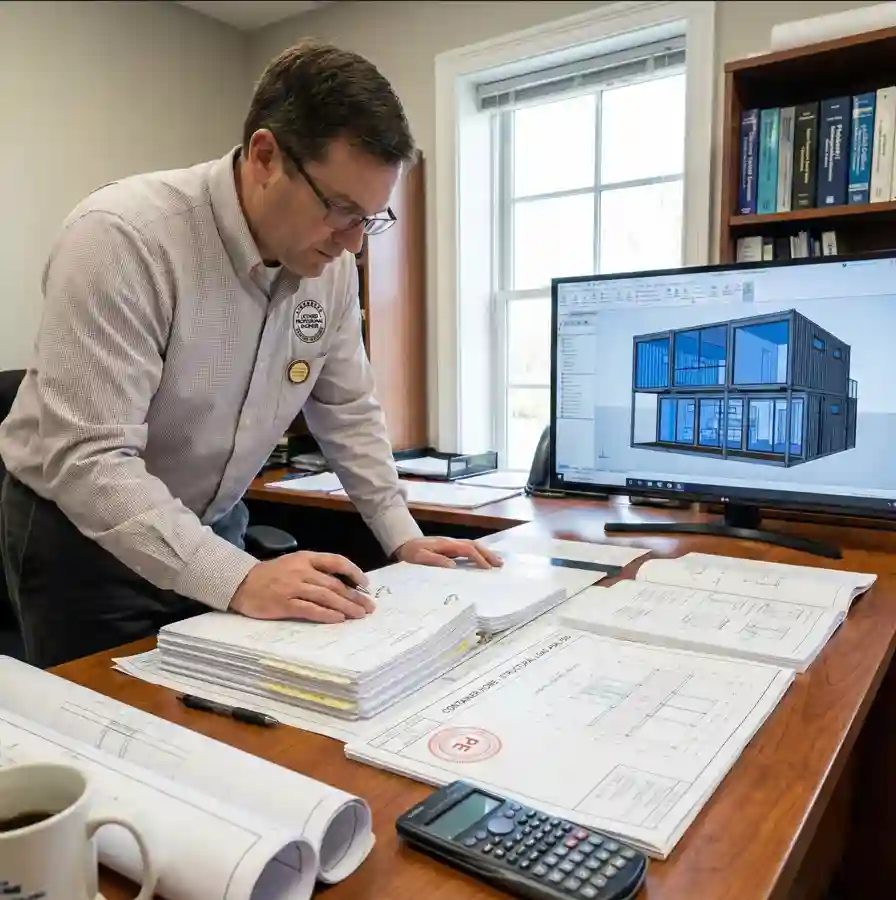
A licensed Professional Engineer serves as the critical link between your architectural plans and building department approval. Only a PE licensed in your state can provide the stamped permit ready structural calculations that building officials require. This engineer takes legal responsibility for certifying that your container home design meets all applicable structural safety standards.
Your PE performs detailed analysis of your specific project conditions—soil bearing capacity at your site, local wind speeds, ground snow loads, and seismic design requirements. Generic calculations don’t satisfy building departments because every site presents unique conditions. The engineer adapts design principles to your exact circumstances.
What Your Professional Engineer Reviews
When you provide comprehensive architectural plans to your PE, they evaluate the structural implications of every design decision. Wall openings reduce the container’s inherent strength, requiring analysis of remaining load paths. Stacked containers need calculations showing adequate bearing at each level and proper load transfer through connections.
The engineer verifies that foundation design adequately supports your structure under all load conditions. Pier foundations must be sized for bearing pressure and frost depth. Slab foundations require proper thickness and reinforcement. Your PE ensures anchoring systems resist uplift from wind loads and overturning from seismic events.
The PE Stamp and Legal Significance
The PE stamp (also called a seal) represents the engineer’s professional certification that calculations comply with engineering standards and applicable codes. This stamp carries legal weight—the engineer assumes liability for the structural adequacy of their design. Building officials trust the PE stamp because engineers face professional and legal consequences for inadequate work.
After purchasing comprehensive plans from PermitContainerhomes.com, you’ll work with a licensed PE who will review the detailed documentation, adapt it for your site conditions, and provide stamped drawings required for permit submission. Our plans include all the information engineers need to efficiently produce permit ready structural calculations.
For additional guidance on residential building requirements and working with engineering professionals, the U.S. Department of Energy provides resources on meeting code standards for innovative housing construction including container-based projects.
📖 View IBC Section 1604.5 Risk Category Requirements
IBC Section 1604.5 – Risk Category:
Each building and structure shall be assigned a risk category in accordance with Table 1604.5. Where a referenced standard specifies an occupancy category, the risk category shall not be taken as lower than the occupancy category specified therein. Where buildings or structures have two or more portions that are structurally separated, each portion shall be separately classified. Residential container homes typically fall under Risk Category II, which establishes the baseline for load calculations including importance factors for wind and seismic design.
Source: 2021 International Building Code
Step-by-Step Process: From Plans to Stamped Calculations
Obtaining permit ready structural calculations follows a systematic process that begins with complete architectural documentation. The more detailed information you provide your engineer upfront, the faster they can complete calculations and the fewer revision cycles you’ll face. Understanding each phase helps you prepare properly and avoid delays.
Phase 1: Initial Documentation Gathering
Start by assembling all project information your PE will need. This includes architectural drawings showing container sizes and layouts, all proposed openings with dimensions, foundation type and depth, and intended modifications. Provide site-specific data including soil reports if available, site address for climate data lookup, and any special conditions like proximity to coastlines or hillside locations.
Your engineer needs to know the building’s occupancy classification, number of stories, and any special use requirements. For container homes, specify whether you’re using new or used containers and provide manufacturer specifications if available. Complete documentation at project start prevents multiple rounds of questions and calculation revisions.
Phase 2: Engineering Analysis and Calculations
Your PE begins by determining all applicable loads based on your location and building codes adopted by your jurisdiction. They calculate dead loads from material weights, live loads from occupancy type, and environmental loads specific to your site. This analysis considers how modifications affect the container’s structural behavior.
The engineer designs or verifies structural elements including modified container frames, supplemental framing systems, floor and roof structures, and all connections. They ensure adequate load paths exist from roof through walls to foundation. Foundation design receives particular attention to ensure proper bearing and anchorage.
Phase 3: Calculation Package Preparation
Once analysis is complete, your PE prepares the formal calculation package. This document includes a cover sheet with project information and PE stamp, load determination summaries with referenced code sections, member design calculations showing capacity checks, and connection details with specifications. The package must be organized logically for building official review.
| Phase | Timeline | Cost Range | Key Deliverables |
|---|---|---|---|
| Initial Consultation | 1-2 days | Often no charge | Scope definition, fee quote |
| Engineering Analysis | 1-3 weeks | $2,000-$5,000 | Load calculations, member design |
| Calculation Package | 3-5 days | Included in PE fee | Stamped structural calculations |
| Plan Review Response | 1-2 weeks if needed | $500-$1,500 additional | Revised calculations per comments |
Note: Timelines and costs vary significantly by location, project complexity, and engineer workload. PE fees reflect the engineer’s liability and professional expertise. These are general estimates based on typical residential container home projects.
Phase 4: Permit Submission and Review
You submit the stamped permit ready structural calculations along with architectural drawings to your building department. Plan reviewers examine calculations for code compliance, clarity, and completeness. Most jurisdictions take 2-6 weeks for initial review, though timelines vary widely by locality and application volume.
Building officials may issue requests for additional information or clarification. Your PE responds to these comments, providing revised calculations or additional documentation as needed. Having an experienced engineer familiar with local building officials can streamline this process significantly.
Cost Breakdown and Timeline Expectations
Understanding the investment required for permit ready structural calculations helps you budget appropriately for your container home project. PE fees typically range from $2,000 to $5,000 for residential container homes, though costs vary based on project complexity, regional rates, and engineer experience. This represents a separate expense from your architectural plan purchase.
Several factors influence PE costs for producing permit ready structural calculations. Simple single-container homes with minimal modifications cost less than multi-container designs with extensive openings. Projects in high-wind or high-seismic zones require more detailed analysis, increasing engineering time. Sites with challenging soil conditions or steep slopes add complexity and cost.
What Influences Engineering Costs
Project complexity represents the primary cost driver. A 20-foot container with standard door and window openings requires less engineering effort than a three-container stack with large wall removals and cantilevered sections. Each modification demands additional calculations to verify structural adequacy.
Regional variations significantly affect PE rates. Engineers in metropolitan areas typically charge higher hourly rates than those in rural locations. However, local engineers familiar with your jurisdiction’s building department can provide efficiency that offsets higher rates. They understand local plan reviewers’ expectations and can anticipate questions.
| Project Complexity | Typical PE Cost | Timeline Estimate | Characteristics |
|---|---|---|---|
| Simple (1-2 containers) | $2,000-$3,000 | 2-3 weeks | Standard openings, flat site, low wind/seismic |
| Moderate (2-3 containers) | $3,000-$4,000 | 3-4 weeks | Multiple openings, stacking, moderate climate loads |
| Complex (3+ containers) | $4,000-$5,000+ | 4-6 weeks | Large openings, complex stacking, high wind/seismic |
| Revision Cycles | $500-$1,500 per cycle | 1-2 weeks each | Responding to plan review comments |
Costs vary by jurisdiction, project specifics, and current engineer workload. These estimates reflect typical residential container home projects. Always obtain written fee quotes before authorizing work.
Hidden Costs and Common Challenges
Beyond the PE’s base fee for permit ready structural calculations, anticipate potential additional expenses. Soil testing and geotechnical reports may cost $500-$1,500 depending on site conditions. Some jurisdictions require special inspections during construction, adding $1,000-$3,000 to total project costs.
Plan review cycles can extend timelines and costs. If building officials issue corrections, your PE must revise calculations and resubmit. Each revision cycle typically requires 1-2 weeks and may incur additional fees. Starting with comprehensive documentation minimizes this risk.
Maximizing Value and Minimizing Delays
Invest in quality architectural plans before engaging your PE. Detailed plans from PermitContainerhomes.com provide engineers with complete information needed to produce accurate permit ready structural calculations efficiently. Incomplete or amateur drawings force engineers to make assumptions or request clarifications, both of which increase time and cost.
Schedule your PE consultation early in your project timeline. Don’t wait until you’re ready to submit permits to contact engineers. Early engagement allows you to understand requirements and make design adjustments before finalizing plans. This proactive approach prevents discovering costly structural problems late in the process.
Key Takeaways and Expert Tips
Successfully obtaining permit ready structural calculations requires understanding both the technical requirements and the practical process. Armed with the right knowledge and preparation, you can navigate engineering requirements efficiently and avoid common pitfalls that delay container home projects.
Essential Points Summary
- Permit ready structural calculations are mandatory, not optional: Building departments require PE-stamped engineering documentation before issuing permits. Generic calculations don’t satisfy this requirement—your engineer must analyze your specific project, site conditions, and local code amendments.
- Start with comprehensive architectural documentation: Quality architectural plans dramatically reduce PE review time and cost. Complete specifications, clear dimensioning, and detailed connection information allow engineers to work efficiently. Our container home plans include all technical details engineers need.
- Budget appropriately for engineering services: Expect to invest $2,000-$5,000 for professional structural calculations, with costs varying by project complexity and location. This separate expense from plan purchases reflects the engineer’s expertise and professional liability. Factor additional costs for soil reports and potential revision cycles.
- Allow adequate time for the complete process: From engaging a PE through permit approval, anticipate 8-16 weeks total. Rushing leads to errors and incomplete submissions that ultimately take longer. Building departments work on their own schedules, and most jurisdictions require 4-12 weeks for plan review after submission.
- Verify PE credentials and local experience: Confirm your engineer holds an active license in your state through PE license verification channels. Local engineers familiar with your building department provide significant value through their understanding of reviewer expectations and jurisdiction-specific requirements.
- Container modifications require specialized analysis: Every opening cut into container walls affects structural performance. Your PE must calculate how loads redistribute through remaining structure and design any necessary reinforcement. This specialized knowledge separates qualified container home engineers from those unfamiliar with modified shipping container behavior.
- Load path analysis is critical for approval: Building officials scrutinize how forces transfer from roof through walls to foundation. Your permit ready structural calculations must clearly demonstrate complete load paths under all loading conditions including wind, seismic, and combined load scenarios.
- Foundation design integrates with structural calculations: Your engineer designs the complete system from superstructure through foundation. Inadequate foundation design represents a common rejection reason. Proper bearing capacity, frost depth consideration, and uplift resistance all require documentation.
Moving Forward with Confidence
With proper understanding of what permit ready structural calculations entail and how to obtain them efficiently, you’re well-positioned to navigate the engineering phase of your container home project. The investment in professional engineering services protects your safety, satisfies legal requirements, and ultimately enables you to build the container home of your dreams.
Remember that working with a qualified local PE for container home projects provides advantages beyond just meeting permit requirements. These professionals offer valuable design guidance, can identify potential issues before construction begins, and provide the credibility with building officials that smooths the approval process.
Ready to Start Your Container Home Project?
Explore our collection of comprehensive container home plans designed to align with 2021 IRC and IBC building code standards. Each plan includes complete architectural drawings, structural details, electrical layouts, plumbing systems, and beautiful 3D visualizations—everything your Professional Engineer needs for efficient review and production of permit ready structural calculations.
Browse Complete Plan Collection →Need Plan Modification? If you find a plan you love but need to adjust it for your local climate or personal needs—such as moving a window or adding a door—our team can help. We offer a professional plan modification service after purchase. Simply contact us with your modification needs, and we’ll provide a personalized quote.
⚖️ Professional Engineering & Plan Documentation Disclaimer
Important: Our plans are permit-ready but require review and stamping by a local licensed Professional Engineer (PE) in your jurisdiction. Final approval is subject to local building codes and regulations. We recommend consulting your local building department to verify all requirements.
Refund Policy: Due to the digital nature of our plans, all sales are final. Please review our Refund Policy for details.