
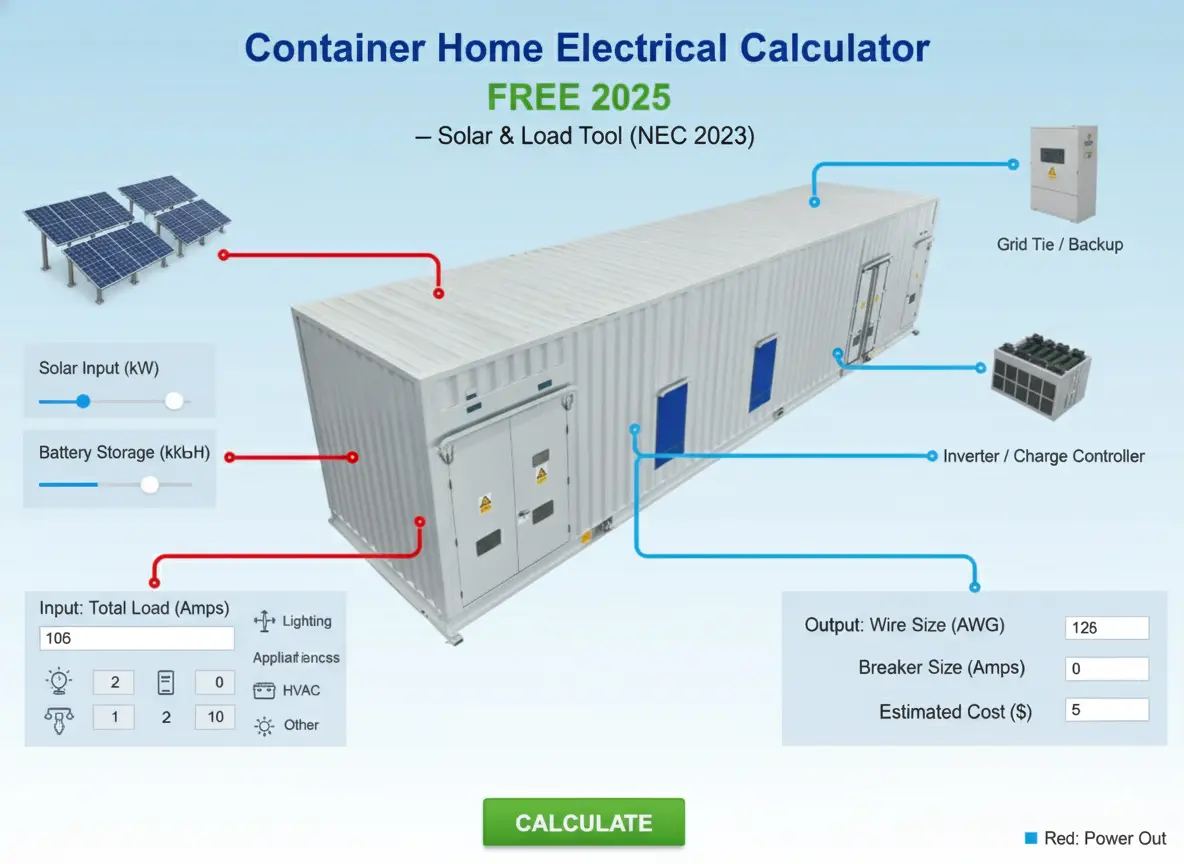
FREE Container Home Electrical Calculator 2025 — Solar & Load Calculator (NEC 2023)
Calculate your shipping container home’s electrical panel size, circuit breakers, inverter capacity, and solar panel requirements. NEC 2023 compliant for all 50 states.
⚠️ Important Safety Notice
This container home electrical calculator provides estimates only. Always consult a licensed electrician and structural engineer before modifying shipping containers or installing electrical systems. Ensure compliance with NEC 2023 and local building codes. Improper electrical setups can cause fire, injury, or death.
Estimate Your Container Home Electrical & Solar Needs with Ease!
Building a shipping container home? One of the most critical steps is understanding your electrical and solar power needs. Whether planning to go off-grid with solar panels or sizing your electrical panel correctly, our container home electrical calculator is here to help!
This free tool helps you:
- Estimate daily energy consumption to determine solar panel wattage needed
- Calculate peak power demand to size your inverter and electrical panel
- Assign appliances to circuits and get breaker size recommendations
- Plan your electrical system following NEC 2023 guidelines (opens in new window)
📋 How to Use This Container Home Electrical Calculator
- Choose a Preset: Select a typical setup (1-5 bedrooms) or start from scratch
- Add Your Appliances: List each device with power rating (watts), daily usage hours, and circuit assignment
- Calculate: Click “Calculate” to see total energy needs, peak demand, breaker sizes, and solar requirements
- Review Results: Use the electrical panel layout to plan wiring and solar estimates for panel sizing
Use the Container Home Electrical Calculator (100% FREE)
Your Container Home Appliances
| Appliance Name | Power (Watts) | Daily Usage (Hours) | Circuit Assignment | Action |
|---|---|---|---|---|
Next Steps for Your Container Home Electrical System
After using the container home electrical calculator, follow these steps to complete your electrical design:
- Use these estimates to plan your electrical panel, wiring, and solar system
- Consult a licensed electrician to finalize your design and ensure NEC 2023 compliance
- Order permit-ready container home plans from Permit Container Homes
- Get local PE review and stamping before permit submission
- Size your solar panels and battery bank based on calculator results
Container Home Electrical Calculator FAQ
What electrical panel size do I need for my container home?
Container home electrical panel size depends on your total load calculated by the electrical calculator. Most single-container homes (20-40 feet) need 100-150 amp panels. Multi-container homes (2+ containers) typically require 200 amp panels. Our calculator determines the minimum panel size based on NEC 2023 load calculations with proper safety margins.
How much solar power do I need for a shipping container home?
Solar power requirements vary based on daily energy consumption shown in the electrical calculator results. A typical 40-foot container home uses 15-30 kWh per day, requiring 3,000-6,000 watts of solar panels. Our container home electrical calculator estimates solar needs assuming 5 peak sun hours and 20% system losses. Off-grid setups need battery banks sized for 2-3 days of autonomy.
Can I use this electrical calculator for off-grid container homes?
Yes! Our container home electrical calculator includes solar panel sizing and battery bank estimates perfect for off-grid shipping container homes. The calculator provides daily energy consumption for battery sizing and required solar wattage for panel selection. For off-grid systems, add a charge controller, inverter, and battery bank based on the electrical calculator results.
What circuits are required for container home electrical systems?
NEC 2023 requires specific circuits for container homes calculated by our electrical tool: kitchen small appliances (2x 20A GFCI), bathroom (20A GFCI), laundry (20A), general lighting (15A), and dedicated circuits for major appliances. Bedrooms need arc-fault protection (15A AFCI). Our calculator assigns appliances to appropriate circuits following NEC 2023 code requirements.
Do I need a licensed electrician for container home wiring?
Yes, absolutely. While our container home electrical calculator provides planning estimates, all electrical work on shipping containers must be performed by licensed electricians following NEC 2023 and local codes. Container homes present unique challenges like grounding metal structures, insulation penetration, and code compliance that require professional expertise.
How do I size an inverter for my container home?
Inverter sizing for container homes depends on peak power demand calculated by the electrical calculator. Our calculator applies a 75% diversity factor (not all appliances run simultaneously) then recommends an inverter 25% larger for safety margin. For example, if peak demand is 8,000W, we suggest a 10,000W (10kW) inverter. Pure sine wave inverters are required for sensitive electronics.
What’s the difference between 120V and 240V circuits?
120V circuits power standard outlets, lights, and small appliances. 240V circuits power heavy loads like ranges, dryers, AC units, and water heaters. 240V circuits use less current for the same power, allowing smaller wire sizes. Our container home electrical calculator identifies which appliances need 240V circuits and sizes breakers accordingly.
Can I install solar panels on my container home roof?
Yes, but container roofs require reinforcement for solar panel mounting. Standard 40-foot containers can support 8-12 solar panels (400W each) with proper structural modifications. Our electrical calculator provides total solar wattage needed—divide by your panel wattage to determine quantity. Consult a structural engineer for roof loading calculations before installation.
What’s a diversity factor in electrical load calculations?
Diversity factor accounts for the fact that not all appliances operate simultaneously. NEC 2023 allows 75% diversity for residential loads. If your container home has 10,000W of appliances, peak demand might be 7,500W. Our container home electrical calculator applies appropriate diversity factors to provide realistic inverter and panel sizing.
How accurate is this container home electrical calculator?
Our electrical calculator uses NEC 2023 standards and industry-standard solar calculations. Results are estimates for planning purposes. Actual requirements vary by usage patterns, climate, and local codes. Always verify calculations with a licensed electrician and PE engineer. Use the container home electrical calculator results as a starting point for professional electrical design and permit-ready plans.


