Are Container Homes Legal in Florida? Hurricane Codes Explained
Complete Florida Building Code Requirements, Wind Load Calculations & Permit Process for Hurricane-Resistant Container Homes
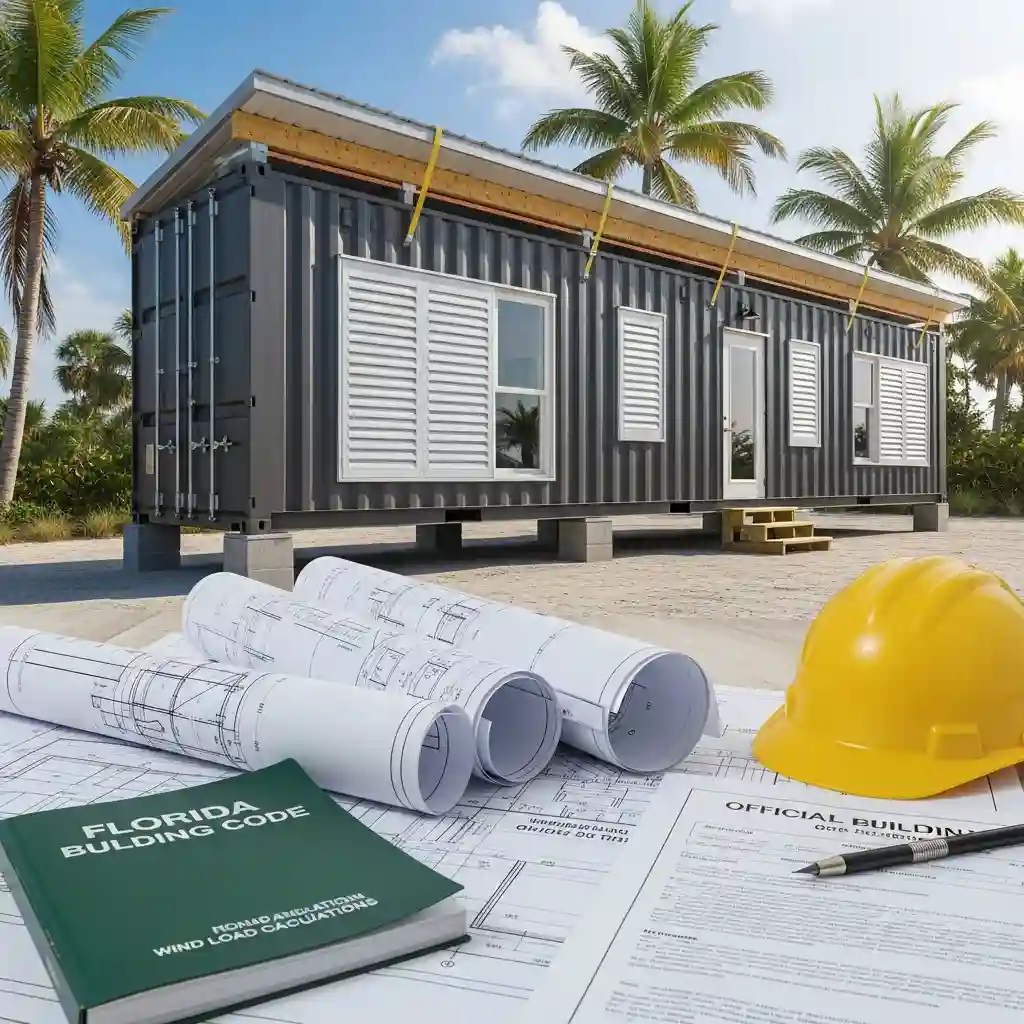
Yes, container homes are legal in Florida, but they must meet strict hurricane-resistant construction standards under the Florida Building Code. Container homes in the Sunshine State require engineered wind load calculations, structural certifications from a Professional Engineer, and comprehensive building permits that address Florida’s unique coastal and hurricane-prone environment.
Florida’s coastal location and history of devastating hurricanes have shaped some of the most rigorous building standards in the nation. Container homes must demonstrate they can withstand wind speeds ranging from 130 mph to over 170 mph depending on location, resist uplift forces during storms, and maintain structural integrity under extreme weather conditions that would challenge conventional construction.
This guide walks through Florida’s specific requirements for container home construction, explains how wind load calculations protect your investment, details the Professional Engineer review process, and provides clear steps for navigating permits in hurricane zones. You’ll learn exactly what the Florida Building Code requires and how to build a container home that meets or exceeds these safety standards.
Florida Container Home Legal Status
Container homes are completely legal throughout Florida when constructed according to the Florida Building Code. The state classifies shipping containers converted into habitable structures as permanent residential buildings, subject to the same rigorous standards that apply to traditional site-built homes, with additional emphasis on hurricane resistance and wind load performance.
State-Level Requirements
The Florida Building Code establishes minimum construction standards applicable statewide, but container homes must specifically address wind load requirements that vary by location. Coastal areas and regions within the High-Velocity Hurricane Zone (HVHZ) face the strictest requirements, with design wind speeds ranging from 140 mph to over 180 mph for ultimate design calculations.
Container homes must obtain building permits for structural work, electrical systems, plumbing, mechanical installations, and any modifications that affect the building envelope. Properties located in coastal construction control lines or designated flood zones face additional permitting requirements through the Florida Department of Environmental Protection and FEMA compliance standards.
Local Zoning Considerations
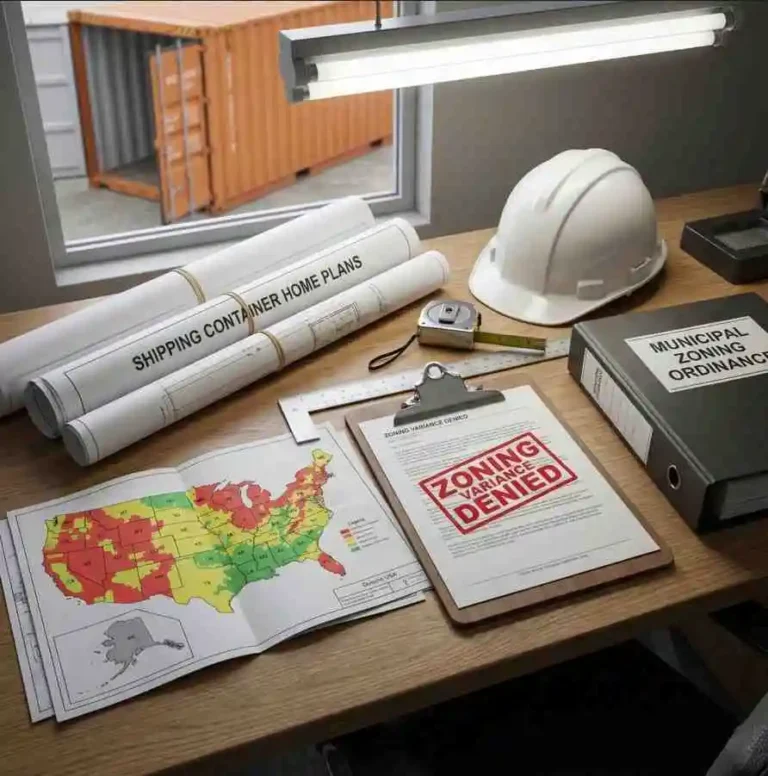
While the Florida Building Code provides statewide construction standards, local jurisdictions maintain authority over zoning regulations and land use designations. Counties and municipalities establish where container homes can be located, minimum lot sizes, setback requirements from property lines, and aesthetic standards that may affect exterior finishes or architectural appearance.
| Jurisdiction Type | Primary Authority | Key Requirements |
|---|---|---|
| State Level | Florida Building Code | Structural integrity, wind resistance, hurricane standards |
| County Level | County Building Department | Permit issuance, plan review, inspections |
| Municipal Level | City/Town Zoning Board | Land use, setbacks, aesthetic requirements |
| Special Districts | HVHZ, Coastal Zones | Enhanced wind standards, flood compliance |
Note: Always verify requirements with your specific county and municipal building departments, as local amendments to the Florida Building Code may impose additional standards.
Florida Building Code & Hurricane Standards
The Florida Building Code adopts and modifies the International Residential Code and International Building Code with specific amendments addressing hurricane resistance and wind load performance. Container homes must comply with these enhanced standards, which exceed baseline IRC/IBC requirements used in most other states. The International Code Council publishes the base IRC standards, which Florida then strengthens through state-specific amendments focused on coastal resilience.
Wind Design Requirements
Florida divides the state into wind zones based on ultimate design wind speeds that range from 130 mph in interior regions to 180+ mph in coastal areas. These wind speed values represent the structural loads that buildings must resist with appropriate safety factors, accounting for both main wind force resisting systems and component and cladding pressures.
📖 View Full IRC Section R301.2.1 Wind Design Criteria
IRC Section R301.2.1 – Wind Design Criteria:
Buildings and portions thereof shall be constructed in accordance with the wind provisions of this code using the ultimate design wind speed in Table R301.2 as determined from Figure R301.22. The structural provisions of this code for wind loads are not permitted where wind design is required as specified in Section R301.2.1.1. Where different construction methods and structural materials are used for various portions of a building, the applicable requirements of this section for each portion shall apply. Where not otherwise specified, the wind loads listed in Table R301.2.11 adjusted for height and exposure using Table R301.2.12 shall be used to determine design load performance requirements for wall coverings, curtain walls, roof coverings, exterior windows, skylights, garage doors and exterior doors.
Source: 2021 International Residential Code
Structural Integrity Standards
Container homes must demonstrate complete load path connections from roof structure through walls to foundation, ensuring that wind uplift forces and lateral loads transfer safely to the ground without failure. This continuous load path requirement applies to all fasteners, connectors, and structural attachments, with particular attention to roof-to-wall connections where hurricane forces create the most significant uplift pressures.
The Florida Building Code requires that roof assemblies resist both positive (downward) and negative (uplift) pressures, with uplift forces often exceeding downward loads in hurricane conditions. Container homes typically require engineered hurricane straps, reinforced roof connections, and properly anchored foundation systems that exceed standard residential construction practices.
📖 View IRC Section R602.3.5 Braced Wall Panel Uplift Load Path
IRC Section R602.3.5 – Braced Wall Panel Uplift Load Path:
Braced wall panels located at exterior walls that support roof rafters or trusses including stories below top story shall have the framing members connected in accordance with one of the following: 1. Fastening in accordance with Table R602.31 where: 1.1. The ultimate design wind speed does not exceed 115 mph (51 m/s), the wind exposure category is B, the roof pitch is 5:12 or greater, and the roof span is 32 feet (9754 mm) or less. 1.2. The net uplift value at the top of a wall does not exceed 100 plf (146 N/mm). The net uplift value shall be determined in accordance with Section R802.11 and shall be permitted to be reduced by 60 plf (86 N/mm) for each full wall above. 2. Where the net uplift value at the top of a wall exceeds 100 plf (146 N/mm), installing approved uplift framing connectors to provide a continuous load path from the top of the wall to the foundation or to a point where the uplift force is 100 plf (146 N/mm) or less.
Source: 2021 International Residential Code
Opening Protection Requirements
Windows, doors, and other openings in container homes located in windborne debris regions must be protected against impact from hurricane-driven projectiles. The Florida Building Code requires that glazed openings meet large missile impact testing standards or be protected with approved hurricane shutters, impact-resistant glazing, or code-compliant panels.
| Wind Zone | Design Wind Speed | Opening Protection |
|---|---|---|
| Wind Zone 1 | 130-140 mph | Standard glazing with shutters recommended |
| Wind Zone 2 | 140-150 mph | Impact-resistant glazing or approved shutters |
| Wind Zone 3 | 150-170 mph | Impact-rated systems, windborne debris protection |
| Wind Zone 4 | 170+ mph | HVHZ-approved impact protection systems |
Note: Wind zones and design criteria must be verified through local building department and site-specific engineering analysis. Values shown represent typical requirements but may vary based on terrain, building height, and exposure category.
Wind Load Calculations for Florida
Wind load calculations form the critical engineering foundation for Florida container homes, determining the structural forces that walls, roofs, foundations, and connections must resist during hurricane events. These calculations account for ultimate design wind speeds, exposure category based on terrain, building height, and the effective wind areas of different building components.
Understanding Ultimate Design Wind Speed
The Florida Building Code bases structural requirements on ultimate design wind speeds (Vult) that represent 3-second gust speeds with appropriate risk and safety factors included. These values differ significantly from the “sustained wind speeds” reported in weather forecasts—a 140 mph ultimate design wind speed actually prepares structures to withstand hurricane-force winds that would cause catastrophic damage to buildings not engineered to Florida standards.
Component and Cladding Pressures
Wind loads separate into two categories: main wind force resisting system (MWFRS) loads that affect overall structural stability, and component and cladding (C&C) loads that determine pressures on individual building elements like roof panels, wall sections, windows, and doors. Container homes require both calculations, with C&C loads typically governing the design of roof attachments, window installations, and exterior finish materials.
Effective wind areas determine the pressure coefficients applied to different building zones, with corner regions and roof edges experiencing significantly higher loads than interior sections. Container homes often create larger effective wind areas than traditional framed construction, potentially increasing the design pressures that structural elements must resist.
📖 View IRC Section R301.2.1.4 Exposure Category
IRC Section R301.2.1.4 – Exposure Category:
Buildings and structures shall be assigned an exposure category based on the exposure of the structure. For a site where exposure categories B, C or D exist in different directions, the exposure resulting in the highest wind loads shall be used for design. Exposure B shall apply where surface roughness B prevails in the upwind direction for a distance greater than 1,500 feet (457 m) or 10 times the building height, whichever is greater. For a site where exposure B does not apply and where surface roughness C or D prevails in the upwind direction for a distance of at least 600 feet (183 m) or 10 times the building height, whichever is greater, that surface roughness shall apply. For a site where the exposure B requirements are not met and where surface roughness C or D does not prevail for the minimum distance, a transition from exposure C or D to exposure B shall be assumed.
Source: 2021 International Residential Code
Uplift Forces and Foundation Anchorage
Hurricane winds create substantial uplift forces on roof structures, often exceeding dead load by factors of three or more in coastal high-wind zones. Container homes must transfer these uplift loads through continuous connections from roof to wall to foundation, with proper anchorage preventing the entire structure from separating from its foundation during extreme wind events.
Foundation systems for Florida container homes typically require engineered helical piers, reinforced concrete piers, or monolithic slab foundations with embedded anchor bolts that resist both uplift and overturning forces. The specific foundation design depends on soil conditions, flood zone requirements, and the calculated wind loads for the building location. For additional guidance on residential foundation requirements that resist wind loads, the U.S. Department of Energy provides resources on integrated structural and energy performance strategies for coastal construction.
| Calculation Component | Typical Florida Value | Engineering Requirement |
|---|---|---|
| Ultimate Design Wind Speed | 140-180 mph | Site-specific from FBC wind maps |
| Exposure Category | C (typical coastal) | Based on terrain and proximity to water |
| Roof Uplift Pressure | 40-80 psf | Calculated per effective wind area |
| Wall Lateral Pressure | 30-60 psf | Varies by building height and wind zone |
| Foundation Uplift Resistance | Per PE calculation | Must exceed total uplift with safety factor |
Note: Values shown are representative examples only. Actual wind load calculations must be performed by a licensed Professional Engineer using site-specific data, building dimensions, and Florida Building Code methodologies.
Professional Engineer Requirements
Florida law requires that a Professional Engineer licensed in the state review, seal, and take responsibility for residential construction plans that exceed prescriptive code provisions or involve alternative construction methods like shipping containers. This PE review ensures that wind load calculations accurately reflect site conditions, structural modifications maintain required strength, and all building systems meet Florida Building Code performance standards.
What Your Professional Engineer Reviews
The PE evaluates your container home plans against Florida’s specific wind load requirements, soil conditions at your building site, flood zone designations if applicable, and the structural integrity of any modifications made to the original shipping containers. Engineers verify that roof attachments, wall-to-foundation connections, and all structural elements provide the continuous load path required to resist hurricane forces.
Professional Engineers calculate actual wind pressures for your building location and dimensions, design connection details that meet or exceed code minimums, specify appropriate fasteners and hardware rated for high-wind applications, and prepare stamped drawings that demonstrate code compliance. These stamped plans become the official construction documents submitted with your building permit application.
The PE Stamping Process
After purchasing comprehensive plans from PermitContainerhomes.com, you’ll work with a licensed Florida PE who reviews the detailed documentation, adapts designs for your specific site conditions including wind zone and soil characteristics, performs required structural calculations, and provides stamped drawings required for permit submission to your local building department.
The PE may require site-specific information including soil boring reports, elevation certificates for flood zones, property surveys showing setbacks and easements, and wind zone verification from your building department. This site-specific data allows the engineer to precisely calculate loads and verify that foundation designs suit actual ground conditions at your property.
PE Review Timeline and Costs
Professional Engineering review for Florida container homes typically requires 2-4 weeks depending on project complexity, engineer workload, and the completeness of initial plan documentation. Projects in HVHZ areas or those requiring extensive structural modifications may require additional review time for specialized calculations and connection details.
| Project Scope | Typical Timeline | PE Cost Range |
|---|---|---|
| Single Container (Standard Wind Zone) | 2-3 weeks | $2,000-$3,500 |
| Multi-Container (Standard Wind Zone) | 3-4 weeks | $3,500-$5,000 |
| HVHZ Project (Miami-Dade/Broward) | 4-6 weeks | $4,500-$7,000 |
| Complex Site (Flood Zone, Poor Soil) | 4-6 weeks | $5,000-$8,000 |
Note: Timelines and costs vary significantly based on engineer availability, project complexity, local requirements, and whether additional studies like geotechnical reports are needed. These are general estimates for planning purposes.
Finding Qualified Florida PEs
Florida Professional Engineers specializing in residential construction and familiar with container home projects provide the most efficient review process. Many building departments maintain lists of local engineers who regularly work with their permit office, understanding specific interpretation of code requirements and documentation expectations that streamline approval.
Ask potential engineers about their experience with alternative construction methods, familiarity with Florida Building Code wind load provisions, and whether they’ve successfully completed container home projects in your county or wind zone. Engineers with established relationships with local building officials can often navigate permit review more efficiently than those unfamiliar with local practices.
Florida Permit Process Step-by-Step
Navigating the Florida building permit process for container homes requires understanding both state-level requirements and local jurisdiction procedures that vary significantly across counties. The permit process ensures that your container home meets all structural, electrical, plumbing, mechanical, and life safety standards before construction begins and throughout the building phase.
Pre-Application Requirements
Before submitting permit applications, verify your property’s zoning designation allows residential construction and that container homes are not specifically prohibited by local land use ordinances. Obtain a current property survey showing lot dimensions, setbacks, easements, and any encroachments that might affect building placement or site plan approval.
Properties in Special Flood Hazard Areas require elevation certificates and may mandate elevated foundation systems that raise the lowest floor above Base Flood Elevation. Coastal properties may need Coastal Construction Control Line permits from the Florida Department of Environmental Protection in addition to local building permits, adding time and documentation requirements to the approval process.
Required Permit Documentation
Complete permit applications require PE-stamped structural drawings, architectural site plans showing building placement and setbacks, electrical plans prepared by licensed electricians or engineers, plumbing diagrams meeting Florida Plumbing Code, mechanical system layouts for HVAC installations, and energy compliance calculations demonstrating compliance with Florida Energy Conservation Code requirements.
Building departments also require proof of property ownership, contractor licensing verification if using hired contractors, and often pre-application meetings for alternative construction methods like container homes. Some jurisdictions mandate additional documentation including wind load calculation summaries, foundation design details, and material specifications for hurricane-rated components.
📖 View IRC Section R105.2 Work Exempt from Permit
IRC Section R105.2 – Work Exempt from Permit:
Permits shall not be required for the following. Exemption from permit requirements of this code shall not be deemed to grant authorization for work to be done in violation of the provisions of this code or other laws or ordinances of this jurisdiction. Building: 1. One-story detached accessory structures used as tool and storage sheds, playhouses and similar uses, provided the floor area does not exceed 120 square feet (11 m²). 2. Fences not over 7 feet (2134 mm) high. 3. Retaining walls that are not over 4 feet (1219 mm) in height measured from the bottom of the footing to the top of the wall, unless supporting a surcharge. 4. Water tanks supported directly on grade if the capacity does not exceed 5,000 gallons (18 927 L) and the ratio of height to diameter or width does not exceed 2:1. 5. Sidewalks and driveways. 6. Painting, papering, tiling, carpeting, cabinets, counter tops and similar finish work. 7. Prefabricated swimming pools accessory to a Group R-3 occupancy in which the pool walls are entirely above the adjacent grade and the capacity does not exceed 5,000 gallons (18 927 L). 8. Shade cloth structures constructed for nursery or agricultural purposes. 9. Swings and other playground equipment accessory to a one- and two-family dwelling.
Source: 2021 International Residential Code
Plan Review and Approval Timeline
Plan review timelines vary widely across Florida jurisdictions, with larger counties often maintaining dedicated alternative construction review staff while smaller jurisdictions may require extended review periods for unfamiliar building methods. Standard residential plan reviews typically take 2-4 weeks, but container homes may require 4-8 weeks for initial review as building officials evaluate structural calculations and verify code compliance.
Inspection Schedule
Once permits are issued, construction proceeds through mandatory inspection points including foundation/footing inspection before concrete placement, rough framing inspection verifying structural connections and load paths, rough electrical/plumbing/mechanical inspections before walls are closed, insulation and energy code inspections, and final inspection verifying all systems function properly and meet code requirements.
Container home inspections pay particular attention to structural modifications, welding quality if containers are joined, foundation anchorage resisting wind uplift, roof attachment meeting hurricane standards, and opening protection in windborne debris regions. Inspectors verify that construction matches PE-stamped plans and that all connections meet specified requirements for wind load resistance.
| Permit Phase | Typical Timeline | Key Requirements |
|---|---|---|
| Pre-Application Research | 1-2 weeks | Zoning verification, requirement gathering |
| Document Preparation | 2-4 weeks (with PE) | Stamped plans, site plans, energy calcs |
| Plan Review | 4-8 weeks | Building department technical review |
| Permit Issuance | 1-2 weeks after approval | Fee payment, insurance verification |
| Construction & Inspections | 4-8 months | Progressive inspections at key milestones |
Note: Timelines represent typical scenarios but vary significantly based on jurisdiction workload, project complexity, plan completeness, and whether revisions are required during review. HVHZ projects may require extended timelines.
Cost Analysis & Expert Tips
Building a permitted container home in Florida involves upfront investment in engineering and compliance that protects your long-term investment and ensures insurability in the state’s challenging wind environment. Understanding complete project costs allows realistic budgeting and prevents construction delays from unexpected expenses.
Complete Cost Breakdown
Beyond container purchase and site work, Florida-specific costs include Professional Engineering review and stamping, enhanced foundation systems resisting wind uplift, hurricane-rated windows and doors, impact-resistant glazing or approved shutters, additional structural connections and hardware, permit fees that vary by jurisdiction and project value, and inspection fees throughout construction.
HVHZ projects in Miami-Dade and Broward counties face premium costs for approved materials, specialized engineering, and more rigorous inspection requirements. Budget an additional 15-25% above standard Florida costs for HVHZ compliance, including product approval fees and enhanced structural connections meeting Miami-Dade protocols.
Common Challenges and Solutions
Many jurisdictions initially express concern about container construction due to unfamiliarity with the building method. Overcome this by providing building officials with comprehensive PE-stamped plans, demonstrating that containers meet or exceed conventional construction when properly engineered, and offering to schedule pre-application meetings where your PE can explain structural approach and code compliance strategies.
Insurance and Resale Considerations
Florida homeowners insurance requires proof of permitted construction, PE-stamped structural plans, and documentation that the home meets current Florida Building Code wind standards. Container homes with proper engineering and permitting typically qualify for standard homeowners policies, though you may need to work with insurers familiar with alternative construction methods.
Resale value depends heavily on proper permitting and documented code compliance. Container homes built without permits face severe marketability challenges and may be uninsurable, while properly permitted homes demonstrating hurricane resistance can command premium prices in Florida’s climate-conscious real estate market.
Essential Planning Tips
- Wind Zone Verification: Verify your exact wind zone with your building department before finalizing designs. Even properties a few miles apart can fall into different wind zones, significantly affecting structural requirements and costs.
- Foundation Selection: Choose foundation systems appropriate for both wind loads and soil conditions. Coastal properties with sandy soils often require deep pier foundations, while inland locations may allow more economical slab-on-grade designs if soil bearing capacity is adequate.
- Professional Team Assembly: Identify and engage your PE, general contractor if using one, and specialized trades (welders, hurricane shutter installers) before starting plans. Their input during design prevents costly changes during construction.
- Budget Contingency: Maintain 15-20% budget contingency for unforeseen site conditions, plan revisions during review, or enhanced requirements discovered during permitting process. Florida’s rigorous standards sometimes reveal needs not apparent in initial planning.
- Documentation Organization: Maintain comprehensive records of all engineering calculations, permit approvals, inspection reports, and contractor certifications. This documentation proves invaluable for insurance, resale, and future modifications requiring permit amendments.
Moving Forward with Confidence
Florida’s strict building standards exist to protect lives and property in one of the nation’s most challenging weather environments. Container homes that meet these standards offer exceptional durability, demonstrable structural performance, and peace of mind during hurricane season. With comprehensive plans, qualified Professional Engineering support, and commitment to full permit compliance, your container home can safely withstand Florida’s toughest weather while providing unique, sustainable living space.
The upfront investment in proper engineering and permitting pays long-term dividends through insurance eligibility, structural reliability, and marketability. Florida’s container home market continues growing as more building officials recognize that properly engineered shipping container construction meets or exceeds conventional residential performance when designed to state standards.
Ready to Start Your Florida Container Home Project?
Explore our collection of comprehensive container home plans designed to align with 2021 IRC and IBC building code standards. Each plan includes complete architectural drawings, structural details, electrical layouts, plumbing systems, and beautiful 3D visualizations—everything your Professional Engineer needs for efficient review and Florida Building Code compliance.
Browse Complete Plan Collection →Need Plan Modification? If you find a plan you love but need to adjust it for your local climate or personal needs—such as moving a window or adding a door—our team can help. We offer a professional plan modification service after purchase. Simply contact us with your modification needs, and we’ll provide a personalized quote.
⚖️ Professional Engineering & Plan Documentation Disclaimer
Important: Our plans are permit-ready but require review and stamping by a local licensed Professional Engineer (PE) in your jurisdiction. Final approval is subject to local building codes and regulations. We recommend consulting your local building department to verify all requirements.
Refund Policy: Due to the digital nature of our plans, all sales are final. Please review our Refund Policy for details.